In early 2026, Surat-based Rocket raised $15 million in Series A funding from Accel and Salesforce Ventures. Their product lets anyone describe software in plain English — and receive working, deployable code in return. They called it vibe coding. The VC world called it the future. For the Surat IT community, it was proof that a platform shift was already underway — and that one of our own was leading it.
This is not a trend piece about something that might happen. Vibe coding is happening now, adoption is accelerating faster than any developer tool category since cloud infrastructure, and the decisions Surat IT companies make in the next 12 months will determine whether this wave is an opportunity or a disruption they missed.
What Is Vibe Coding (vs No-Code)
The term "vibe coding" was coined by AI researcher Andrej Karpathy in early 2025 to describe a mode of programming where the developer describes intent in natural language and an AI system produces working code. The developer's role shifts from writing syntax to directing output — reviewing, testing, and refining rather than authoring from scratch.
Critically, vibe coding is not the same as no-code. This distinction matters enormously for IT companies evaluating the competitive landscape.
- No-code tools (Bubble, Webflow, AppGyver) give you drag-and-drop interfaces with predefined components. You assemble from a fixed library. The ceiling is what the tool's creators anticipated.
- Vibe coding tools (Cursor, Bolt.new, Rocket.new, Lovable) accept natural language and produce production-grade code across any stack — React, Node.js, Python, Flutter, whatever the project requires. The ceiling is your ability to describe intent precisely.
A no-code tool builds a website. A vibe coding tool can build an entire SaaS application, a mobile app backend, a custom API integration, or a data pipeline — from a well-written prompt. The architectural ceiling is essentially that of a skilled developer, because the output is actual code that a skilled developer can then extend, review, and deploy.
The Surat Connection: Rocket's $15M Series A
Rocket's $15 million Series A is significant for Surat's IT ecosystem for reasons beyond the headline number. It validates three things simultaneously:
- The category is real — Accel and Salesforce Ventures do not write $15M cheques into trends. They write them into markets. The vibe coding market is now a funded, validated product category.
- Surat can build category-defining products — Rocket is not a Bangalore or Mumbai startup that relocated. It is Surat-native, built by founders who grew up in this ecosystem. That matters for the SIC community's sense of what is possible here.
- The enterprise is paying attention — Salesforce Ventures' participation signals that enterprise buyers are evaluating vibe coding tools for internal developer productivity. The pipeline for enterprise adoption is already forming.
For SIC member companies, Rocket's raise is a reference point: the technology your clients will eventually expect you to understand and deliver against is already funded and in production. The runway to get ahead of this is measured in months, not years.
Tools Leading This Category
The vibe coding tool landscape in 2026 has stratified into distinct categories based on use case and user sophistication:
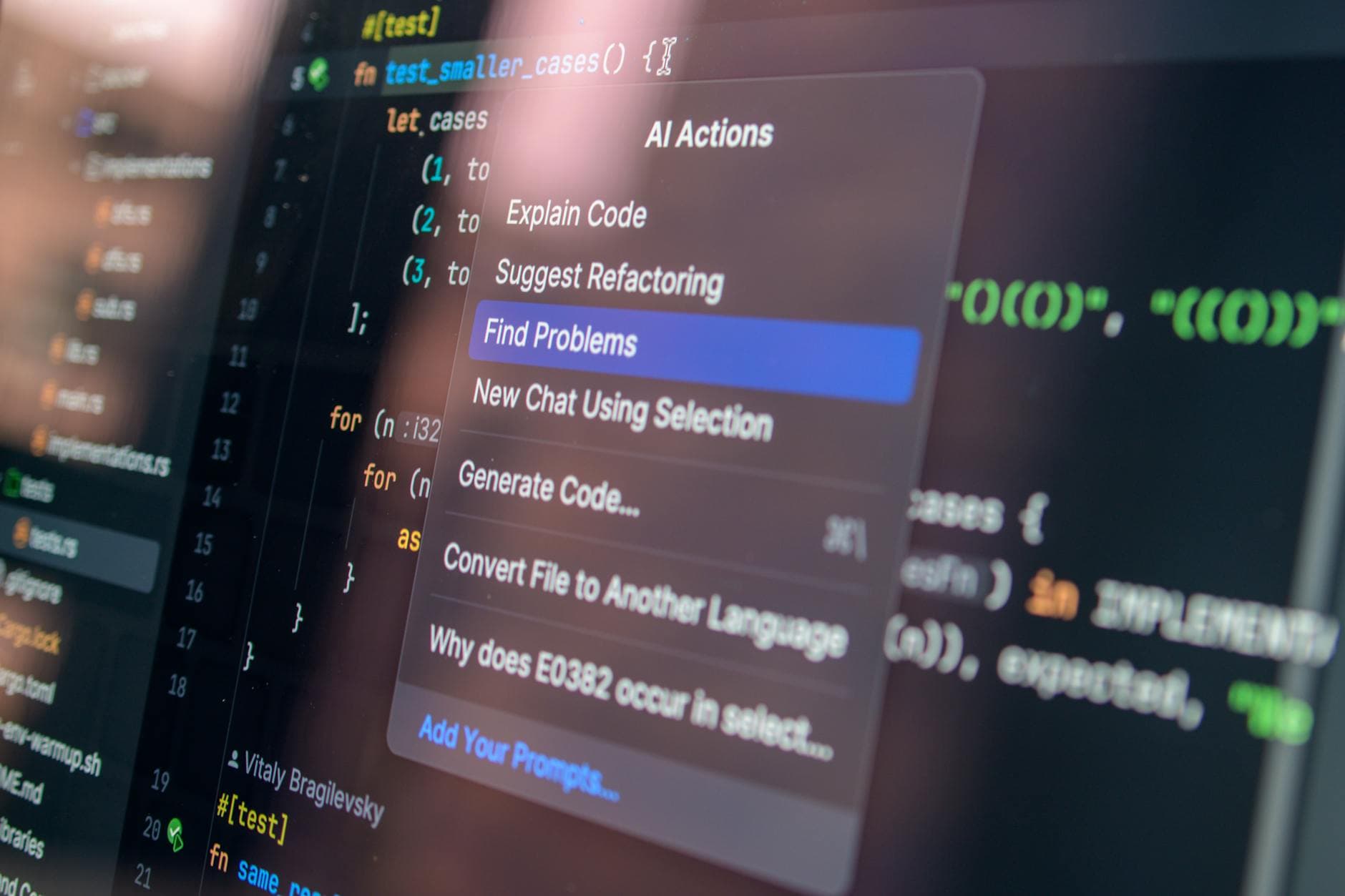
- Cursor — An AI-native code editor built on VS Code. Cursor provides deep codebase awareness — it reads your entire project context, suggests multi-file refactors, and answers questions about your specific implementation. Best for senior developers who want to accelerate output without giving up control. Pricing: $20/month per developer. ROI positive for most teams within the first month.
- Bolt.new — Full-stack web application generation from prompts. Describe an app in plain English, Bolt generates the complete frontend and backend, deployable to production. Best for rapid prototyping, client demos, and MVP validation. Free tier available; Pro at $20/month.
- Rocket.new — Surat-built, Series A funded. Similar to Bolt but with deeper enterprise integration capabilities and a stronger India-specific support model. Worth evaluating for teams that want local support and direct access to the founding team.
- Lovable — Focused on product builders and non-technical founders. Generates full-stack apps with a strong UI component. Popular for SaaS MVPs where speed to market matters more than architectural perfection.
- GitHub Copilot Workspace — Microsoft's entry into vibe coding, integrated with GitHub repositories. Accepts natural language task descriptions and generates a full implementation plan with code changes across multiple files. Best for teams already in the GitHub ecosystem.
Each tool sits in a slightly different position on the control-versus-autonomy spectrum. Cursor gives developers the most control. Bolt and Rocket give the most autonomy. The right choice depends on your team's technical depth and the complexity of what you're building.
Impact on Your Engineering Team
The impact of vibe coding on engineering teams is real, measurable, and not uniformly positive — which is why honest assessment matters more than either hype or dismissal.
Senior developers are more valuable, not less. Vibe coding tools produce code quickly, but they produce code that requires architectural judgment to guide correctly. A senior developer who understands system design, data modeling, security patterns, and performance tradeoffs can direct a vibe coding tool to produce excellent output. The same tool in the hands of someone without that judgment produces fast but brittle code that fails under load or creates security vulnerabilities. The architect's role is amplified, not replaced.
Junior developers face a genuine disruption curve. Tasks that previously took a junior developer a full day — writing CRUD endpoints, building form validation, implementing basic UI components — a vibe coding tool now completes in 20 minutes. This does not mean junior developers are redundant. It means the value a junior developer must add has shifted: from writing code to reviewing AI-generated code, catching logic errors, writing test cases, and building prompt engineering fluency. The junior developers who adapt to this new role will advance faster than any previous generation. Those who do not will find the role contracting.
The skills that predict success with vibe coding:
- Ability to write precise, unambiguous requirements — prompt engineering is a learnable discipline
- Strong code review skills — identifying architectural issues in generated code before they reach production
- Testing discipline — AI-generated code requires the same test coverage as human-written code
- Systems thinking — understanding how generated components integrate with existing architecture
How SIC Members Are Adapting
SIC member companies are not waiting for the transition to be complete before responding. Here is what the early movers are doing:
- AI Champion programs — Several companies have designated one engineer per team as the internal vibe coding expert. This person evaluates new tools, builds internal best practices, trains teammates, and becomes the go-to person for AI-augmented development questions. The investment is one engineer's learning time; the return is a team-wide skill upgrade.
- Proposal restructuring — Companies that have integrated Cursor and Bolt into their workflow are now quoting 30–40% faster delivery timelines as a competitive differentiator. "AI-accelerated delivery" is appearing explicitly in client proposals, with timeline comparisons showing what traditional development would cost versus the AI-assisted approach.
- Hiring criteria updates — Progressive Surat IT companies are adding "vibe coding tool proficiency" to developer job descriptions alongside traditional technology requirements. Candidates who demonstrate Cursor fluency in technical assessments are being prioritized over candidates with equivalent traditional coding skills who have not explored these tools.
- Client education sessions — Several SIC members have run workshops for key clients explaining what vibe coding is, what it can and cannot do, and how it will affect future project timelines and costs. Clients who understand the technology buy more, not less — because they understand the efficiency they are receiving.
The companies adapting fastest share one characteristic: they treated vibe coding as a workflow transformation project, not a technology experiment. They assigned ownership, set learning goals, and measured output changes — the same discipline they apply to any operational improvement.
The 12-Month Window to Act
Technology adoption curves in developer tooling follow a predictable pattern: early adopters (the first 10–15% of the market) gain advantages that compound as they refine their processes. By the time the early majority adopts — typically 12–18 months after the early adopters — the advantage window has closed. The early movers have the case studies, the refined workflows, the trained teams, and the client relationships built on demonstrated capability. Everyone else is catching up.
Vibe coding crossed the early adopter threshold in late 2025. The $15M Rocket funding signals the beginning of mainstream market validation. The 12-month window between now and late 2026 is when the early majority adopts and the advantage window for Surat IT companies closes.
What the next 12 months should look like for serious Surat IT companies:
- Months 1–2: Evaluate Cursor and one full-stack generator (Bolt.new or Rocket.new) on one internal project. Measure actual time savings versus your baseline.
- Months 3–4: Designate an AI Champion per team. Run internal training. Build your company's vibe coding playbook — which tools for which tasks, review standards for AI-generated code, testing requirements.
- Months 5–8: Begin integrating AI-accelerated timelines into client proposals for appropriate project types. Build your first case study comparing AI-assisted versus traditional delivery.
- Months 9–12: Update hiring criteria. Systematize the workflow. Position AI-augmented delivery as a core company capability in marketing and business development.
The Surat IT companies that complete this 12-month cycle will enter 2027 with a genuine competitive advantage: faster delivery, lower cost structure, better margins, and a team skilled in the development paradigm the entire industry is moving toward. The ones who wait will spend 2027 catching up while their competitors win the clients.
Rocket's $15M Series A was a signal. The question for every SIC member company is: what do you do with it?
"Vibe coding's ceiling is much higher than no-code. You're not choosing from predefined components — you're describing intent, and AI writes production-grade code."
— SIC Editorial, Surat IT Community