
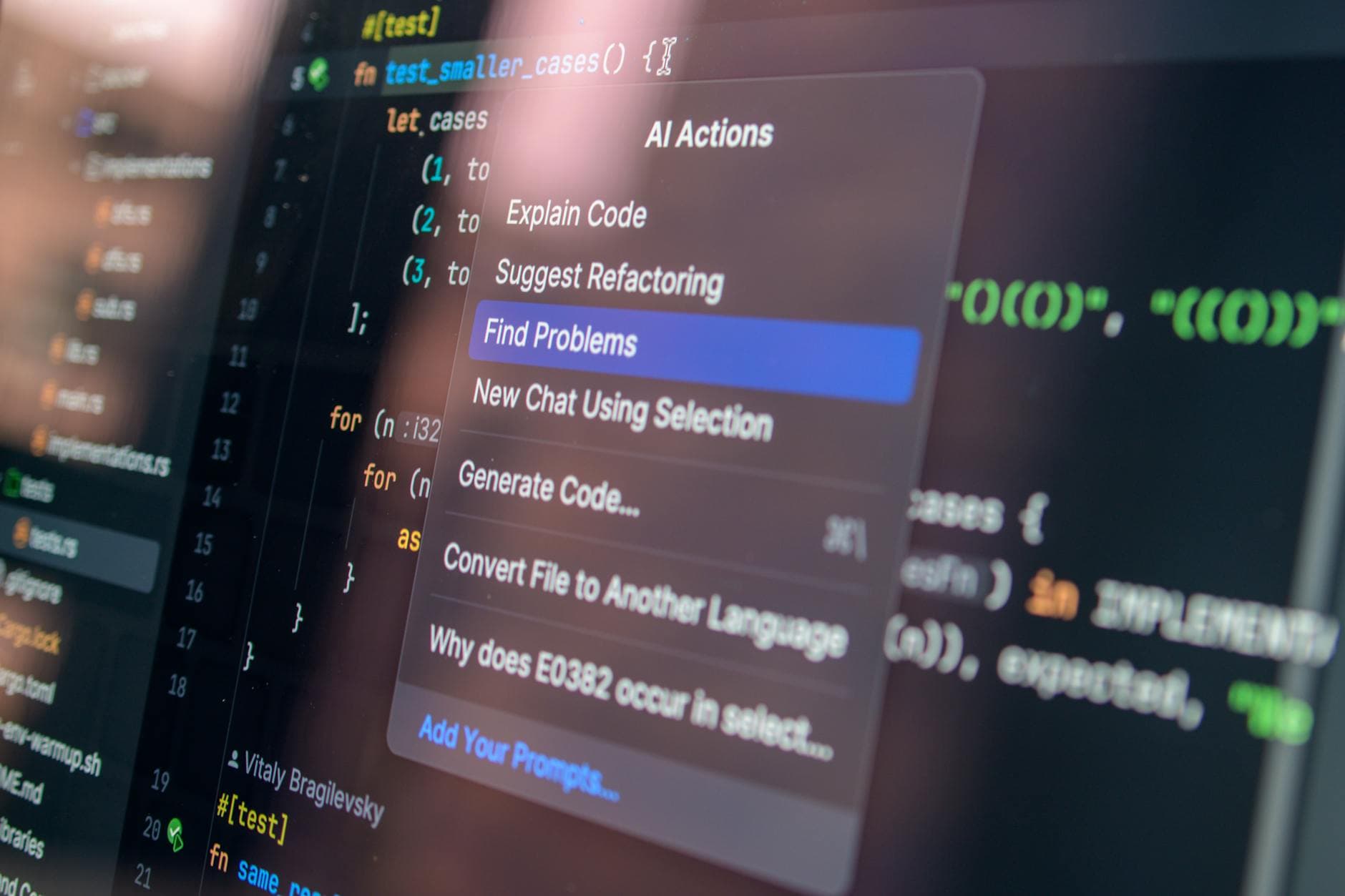
We surveyed 80+ SIC member companies in early 2026 about the AI tools they are actually using — not the ones they signed up for at a conference and opened twice. The list below represents tools with sustained, daily use and honest ROI data from founders who have run them in production environments, not pilots.
The pattern that emerged from the survey is important: the tools with the highest adoption rates are not the most powerful or the most sophisticated. They are the tools that remove a specific, painful bottleneck in work that founders and their teams do every day. The tools that promise to "transform everything" are used least. The tools that remove one specific pain — a 3-hour task becoming a 20-minute task — are used every day.
1. Claude and ChatGPT: Proposal Writing and Client Communication
The most widely adopted AI use case in the SIC survey was proposal and client communication drafting. 73% of founders who responded use an LLM (primarily Claude or ChatGPT) for at least some portion of proposal writing.
The workflow is consistent across respondents: the founder provides the problem context, the client's stated objectives, and the proposed solution approach — the AI generates a structured first draft. The founder edits heavily for accuracy, tone, and the specific relationship context that the AI cannot know. The final output is theirs; the AI eliminates the blank page and the first 40% of writing time.
Average time saved per proposal: 3–4 hours. One founder from a 30-person Surat IT company reported that his proposal win rate improved after adopting AI drafting — not because the AI wrote better proposals, but because faster drafting meant he could iterate on framing and scope 10x more, finding the version that actually resonated with each client's specific concerns rather than submitting the first draft he had time to write.
Beyond proposals, LLMs are used heavily for: client escalation email drafting (communicating bad news clearly and professionally), statement of work template generation, LinkedIn content for founders, and job description writing. Each of these is a task that takes 1–3 hours when done carefully from scratch and 15–30 minutes with AI assistance.
2. GitHub Copilot: The Development Team Multiplier
60% of development teams in the SIC survey are using GitHub Copilot. For context, that number was under 20% in our 2024 survey — the adoption has more than tripled in 12 months.
The ROI data from Surat IT companies is consistent with broader industry research: ROI positive within 2 months for development teams of 5 or more engineers. The mechanism differs by experience level:
- Junior developers (0–2 years): Copilot provides context-appropriate code completions that accelerate the specific task where junior developers are slowest — translating a clear requirement into working code. Founders report that junior developers using Copilot produce output quality closer to mid-level developers. The gap doesn't disappear, but it narrows significantly.
- Senior developers (3+ years): Copilot eliminates boilerplate and accelerates the parts of development that are routine but necessary. Senior developers use the time saved to focus on architecture, code review, and the complex problems where their judgment genuinely matters. One CTO reported that their senior engineers now spend 40% more time on code review and system design — work that scales the team — and proportionally less time writing CRUD operations and configuration scaffolding.
Current Copilot pricing: $10/month per developer for individual plans, $19/month per developer for the Business tier (with security features and policy controls for enterprise use). For a 10-person development team, the annual investment is under ₹2 lakh — typically recouped in the first month if the adoption is genuine.
3. Notion AI: Making Documentation Actually Happen
Every IT company founder knows that documentation is important. Almost no IT company under 50 people has documentation that is complete, current, and actually used by the team. The bottleneck is not the value — it is the friction of writing.
Notion AI reduces that friction significantly. The workflow that has achieved the highest adoption in SIC member companies: a developer or project manager describes what a system does in rough, informal language — the AI generates a structured documentation draft. The human reviews, corrects technical inaccuracies, and publishes. What previously required 2–3 hours of careful writing takes 30–45 minutes.
Beyond new documentation creation, Notion AI is used for: meeting notes summarization (paste the raw transcript, get a structured summary with action items), project postmortem write-ups, and onboarding guides for new employees.
The outcome that founders most consistently cite: knowledge bases that were previously theoretical are now real. The documentation exists, it is reasonably current, and new team members actually use it instead of repeatedly asking the same questions of senior staff. This is not a marginal productivity improvement — it is the difference between institutional knowledge that leaves when a person leaves and institutional knowledge that survives team changes.
4. Midjourney and Firefly: Visual Communication Before Design Sprints
Design-heavy agencies and product companies in the SIC survey have adopted AI image generation primarily for one use case: concept visualization in early client conversations, before any design budget is committed.
The problem this solves is a genuine one. Clients struggle to evaluate a project from wireframes or written descriptions. They have strong reactions — positive or negative — to visuals. A founder who can show a client three visual directions for a product interface in a 45-minute discovery meeting, before any design work has happened, dramatically compresses the feedback cycle and reduces the risk of design work that misses the client's actual vision.
Midjourney (for abstract concept visualization and mood boards) and Adobe Firefly (for more controlled, brand-appropriate visuals) are the two most commonly cited tools. Neither replaces a UX designer. Both allow non-designers to communicate visual direction clearly enough that the subsequent design brief is significantly more precise.
One Surat agency founder reported that adding AI concept visuals to the first client meeting reduced the number of design revision rounds from an average of 4.2 to 2.1 — a 50% reduction in design iteration cost that more than covered the cost of the tools and the time spent generating the concepts.
5. Otter.ai and Fireflies: Ending the "Who Said What" Problem
Client meetings have an accountability problem that every IT founder recognizes. Someone says something in a call. Three weeks later, there is a dispute about what was agreed. Who committed to what scope change? Who approved the additional budget? Who said the deadline was flexible?
AI meeting note tools — primarily Otter.ai and Fireflies.ai in the SIC survey — solve this with transcribed, searchable records of every client call. The adoption pattern is straightforward: enable auto-join on client calls (with client notification and consent), receive a structured summary within 5 minutes of the call ending, share the summary with the client as a documented record of what was discussed and decided.
The founder benefit is explicit: shared notes create shared accountability. When both parties receive the summary immediately after the call, scope creep disputes become rare. The client cannot claim they approved something that is not in the summary. You cannot claim you communicated something that the summary does not show. The record is neutral and immediate.
An important implementation note: always disclose to clients that calls are being transcribed before enabling auto-join. In practice, most clients prefer shared notes — it removes ambiguity for them too. The minority who prefer not to be recorded should have that preference respected.
6. Perplexity AI: Compressing Market Research
New client discovery has a consistent time cost that most IT founders under-account for: understanding an industry you do not work in. When a logistics company approaches you for a fleet management system, or a healthcare provider asks about a patient scheduling platform, the first 2–3 hours of preparation involve understanding how that industry operates — the stakeholders, the vocabulary, the competitors, the regulatory context.
Perplexity AI has become the preferred research starting point for SIC founders doing this type of industry immersion. Unlike a standard LLM, Perplexity searches live web sources and cites them — so the information is current and verifiable rather than drawn from a training cutoff. A 20-minute structured Perplexity session before a new client discovery call gives a founder enough context to ask intelligent questions, use the right vocabulary, and demonstrate genuine interest in the client's domain.
Beyond client discovery, SIC founders use Perplexity for: competitive analysis before pitches (who are the 3–5 competitors for this product category, what do they charge, what are their weaknesses), technology landscape research (what are the current best options for X, what are the trade-offs), and regulatory research (what compliance requirements apply to a product in industry Y).
7. ElevenLabs: Product Demo Videos Without a Recording Studio
Product demo videos and explainer videos are high-value sales and marketing assets. They also require recording setups, professional voiceover, and significant editing time — resources that most growing Surat IT companies cannot justify for every product or feature launch.
ElevenLabs AI voice generation has become the solution for several SIC member companies with serious video content needs. The workflow: write a script, generate professional-quality voice audio, combine with screen recordings or visual assets, add background music and captions. Total production time for a 2-minute explainer: 3–4 hours versus 2–3 days for a traditional production.
The use case requires honest implementation: AI voice is appropriate for internal training content, product feature walkthroughs, technical documentation explainers, and first-version marketing content. It is less appropriate for high-touch sales contexts where a prospect expects a real human voice. The founders who report the highest satisfaction are those who use AI voice for the 80% of video content that does not need to be perfect — and save the production budget for the 20% that does.
The broader principle from the SIC survey: the AI tools with the highest adoption rates are those with a clear, specific use case and a measurable time saving. The tools that fail are those adopted on the basis of capability rather than specific application — tools signed up for because of what they could do in theory, without a defined use case for what they will do in practice. Start with your most painful bottleneck. Find the tool that removes that specific pain. Use it every day before adding the next one.
"The AI tools with highest adoption are ones that remove a specific, painful bottleneck — not tools that promise to revolutionize everything."
— SIC Research Team, Surat IT Community
More to Read

Vibe Coding: How Natural Language Is Replacing Traditional Development
6 min read

How to Actually Deliver GenAI Projects for Clients Without Overselling
10 min read
The Complete AI Tools Stack for IT Agencies, Service Companies & Product Builders in 2026
12 min read